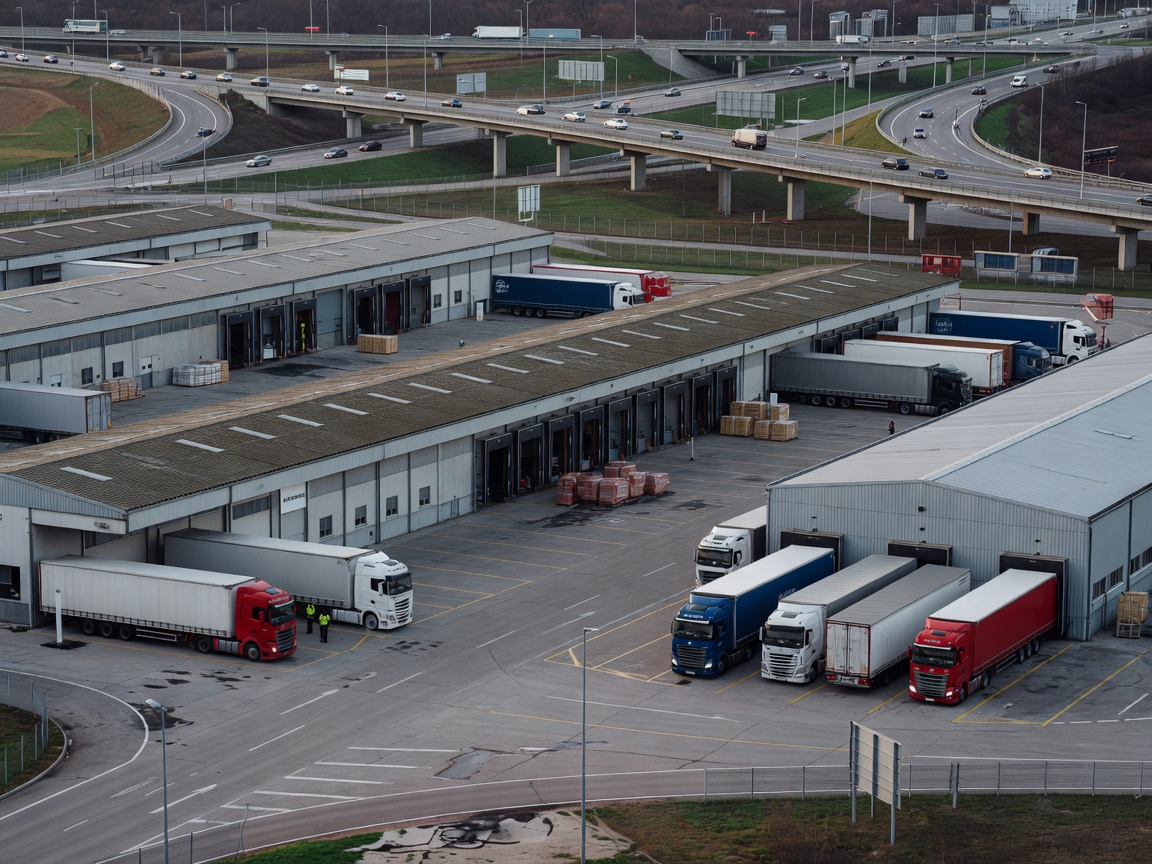
Corridor Placement Dictates Last-Mile Economics
Placing stock 50 kilometers further down the wrong highway can add 24 hours to transit times and double linehaul freight costs. Strategic European storage is about proximity to key multimodal transit arteries.
The Core Dilemma: Centralized Hub vs. Distributed Staging
When a small-to-medium enterprise expands across European frontiers, it faces a fundamental architectural decision regarding physical stock placement:
- Centralized European Mega-Hub: Holding all inventory in a single strategic location—frequently the Benelux region or Western Germany—to serve the entire continent. This simplifies inventory management, minimizes duplicate safety stock, and concentrates your picking labor under one roof. However, it means customers in southern Iberia, Scandinavia, or eastern Europe face 3- to 5-day delivery transit windows.
- Distributed Multi-Node Network: Splitting stock across two or three localized storage bays (e.g., one near Rotterdam/Antwerp for northern Europe, and a second near Milan or Lyon for the Mediterranean belt). This achieves 24- to 48-hour delivery SLAs, but requires higher aggregate capital to maintain safety stock across multiple locations.
Pragmatic Staging Rule
Unless your business is processing more than 1,500 dispatches monthly into a specific regional territory, the administrative friction of managing split inventories usually outweighs delivery speed benefits. Start centralized, then branch outward as demand reaches predictable volume.
Transportation Access: Road, Rail, and Port Proximity
A warehouse facility is only as functional as the asphalt leading up to its gates. When evaluating European storage locations, look closely at infrastructure connectivity:
Facilities clustered near major transport arteries (such as the Rhine-Alpine Corridor connecting Rotterdam to Genoa, or the Mediterranean Corridor linking Spain, France, and Northern Italy) offer frequent, competitive linehaul departures. If your storage depot is tucked away on rural secondary roads subject to weight restrictions or seasonal closures, regional freight carriers will charge remote access premiums for every collection.
Cross-Border Goods Movement and Administrative Realities
While the European Single Market guarantees free movement of goods between EU member states without tariffs, cross-border logistics is not completely devoid of administrative overhead. Different member states enforce specific rules regarding waste electrical directives, packaging recycling registrations, and localized environmental disclosures.
Furthermore, if your storage strategy involves staging stock outside the immediate EU customs territory—for instance, serving continental Europe from a hub in the United Kingdom or Switzerland—every transfer triggers import declarations, transit documents (T1 forms), and potential VAT deferment complexities. Staging stock within an EU-based bonded warehouse allows you to defer customs duties until items are formally dispatched to retail buyers.
Questions to Weigh When Selecting European Storage Nodes
Before committing inventory to a foreign European facility, assess these critical operating variables:
- Carrier Integration: Does the storage facility have daily collections from major European parcel carriers (such as DPD, DHL, GLS, or PostNL), or must you arrange private linehauls?
- Language and Operational Support: Can warehouse staff communicate fluidly on operational matters—such as damaged carton manifests or stock audits—in English or your operating language?
- Environmental Standards: Modern European buyers and business clients increasingly scrutinize supply chain emissions. Does the facility utilize energy-efficient lighting, solar rooftop arrays, or certified waste recycling systems?
- Local Holiday Calendars: European public holidays vary significantly by country and even by federal state. A regional holiday in Bavaria or France can halt warehouse dispatch while your customer service lines remain active.