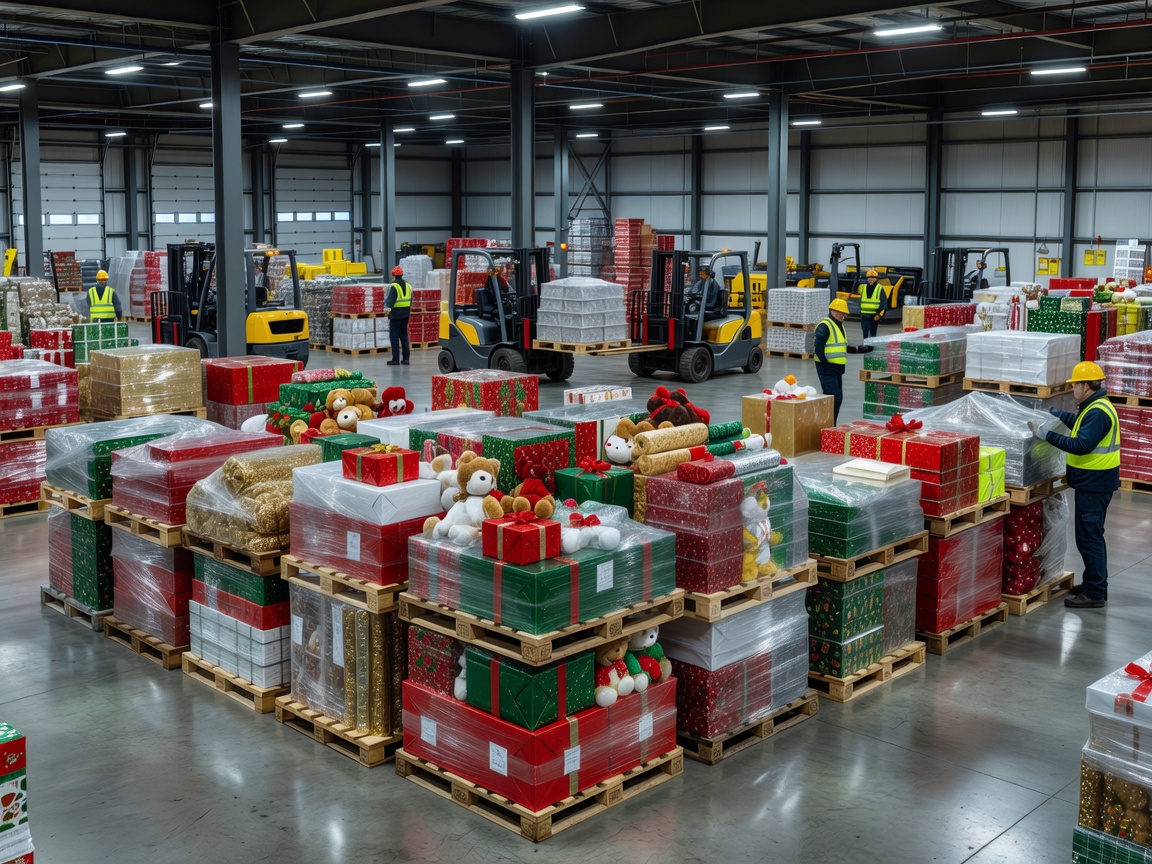
Aligning Storage Expenditures with Sales Waves
A sound business model shouldn't bleed cash in April to preserve empty pallet racking needed only in November. Seasonal warehousing provides short-horizon capacity expansion that matches your incoming inventory receipts.
The Financial Strain of Seasonal Demand Cycles
Many retail, outdoor, and specialty manufacturing brands generate between 40% and 65% of their total annual revenue in a compressed three-month window. For consumer gifting, it’s October through December; for garden, construction, and lifestyle brands, it’s March through June.
The logistics challenge is simple: you cannot sell stock you haven't received yet. To guarantee stock availability during peak trade, small businesses must accept bulk inventory shipments two to three months ahead of customer purchase waves. If you size your permanent business footprint to accommodate this brief tsunami of cartons, you spend the remaining nine months paying rent, insurance, and utilities on ghost space.
Types of Seasonal Assets That Clog Main Operations
When businesses face workspace congestion, it is rarely due solely to sales inventory. A variety of secondary operational assets contribute to floor gridlock:
- Trade Fair Stands & Exhibition Displays: Custom truss booths, branded podiums, and demonstration hardware that look magnificent at an annual conference in Nuremberg or Paris, but sit idle for the other 355 days of the year.
- Packaging Overstock: Ordering 10,000 custom cardboard shipper boxes and protective honeycomb sleeves secures favorable unit pricing, but storing three full pallets of empty boxes inside a compact workspace consumes prime picking real estate.
- Temporary Promotional Assets: Window merchandising kits, seasonal gift bags, and pop-up store fixtures that cannot be discarded but have zero daily utility once the campaign terminates.
The Pre-Peak Timeline
Reserve your seasonal overflow space at least 60 to 90 days before your first container lands. Waiting until stock has left the port to search for warehouse bays often forces businesses to settle for inconvenient, overpriced, or poorly located units under duress.
Moving Inventory In and Out Without Bottlenecks
Intake is only half the battle. When peak orders flood in, moving pallets from an off-site seasonal holding bay to your main dispatch workbench must run like clockwork. A breakdown here can cause delivery delays, negative customer reviews, and costly cancellation rates.
To maintain operational throughput, establish a scheduled "shuttle run" protocol:
- Batch Forecasts: Review weekly sales rates every Monday morning. Do not retrieve single boxes on an ad-hoc basis; pull consolidated replenishment pallets once or twice per week.
- Maintain Identical SKU Groupings: Avoid splitting a single SKU between three different locations. Keep complete master cartons consolidated within the seasonal bay until their entire batch is moved to the picking floor.
- Pre-Stage Returns: Seasonal surges bring seasonal returns. Allocate a small return staging lane in the external unit so return parcels don’t contaminate active outgoing packing lines during peak dispatch weeks.
Evaluating Short-Term Storage Terms
When negotiating seasonal warehouse contracts, focus on contract agility rather than nominal square-meter rates alone:
- Prorated Exit Clauses: Does the agreement allow you to vacate midway through the final month without paying for a full billing cycle?
- Overfill Grace Periods: If a supplier delivers 12 pallets instead of the expected 10, does the facility provide temporary cross-dock holding for 48 hours without invoking penal surcharge rates?
- Forklift Operation Rules: Are you permitted to operate your own pedestrian stacker inside the facility, or are you contractually mandated to pay the facility’s staff per pallet movement?